
What Is A VIN Number And Where Do You Find It?
Where To Find Your Car's Unique Code

Every car on Irish roads carries a code that never changes, no matter how many times the vehicle is sold, resprayed or re-registered. It is the Vehicle Identification Number, or VIN, and there are moments when you will need it: registering an imported car, checking whether your car is subject to a safety recall, or verifying that a used car really is what the seller claims.
Here is what it is, how to read it, and where to look.
Your Car's Fingerprint
A VIN is a unique 17-character code assigned to every vehicle when it is manufactured. No two production vehicles are assigned the same one. Unlike a registration plate, which can change when a car moves country, the VIN is fixed for the life of the vehicle. Under EU rules it must be permanently marked on the vehicle itself and also appear on the manufacturer's plate, which is precisely what makes it useful. It is difficult to alter convincingly without leaving evidence.
In Ireland you will often hear it called the chassis number. The two terms mean the same thing, as 'chassis number' simply refers to where the code is marked on the car. The engine number is a different thing entirely, since engines can be replaced.
The 17-character format has been the international standard since 1981, so a shorter code usually means you are looking at a vintage vehicle. One useful detail: VINs never contain the letters I, O or Q, to avoid confusion with the numbers 1 and 0. If you think you can see one, look again.
How To Read A VIN
The code is not random. Under the international standard, ISO 3779, it breaks into three sections.
The first three characters are the World Manufacturer Identifier, or WMI, which identifies who built the vehicle and where. In Ireland, the National Standards Authority of Ireland (NSAI) is the body responsible for issuing WMI codes to Irish-based vehicle and trailer manufacturers.
Characters four to nine make up the Vehicle Descriptor Section, covering general attributes such as the model, body style and engine type. These are the details a mechanic or parts supplier needs to identify exactly what they are working with.
The final eight characters form the Vehicle Indicator Section, the last four of which are always numeric. Manufacturers typically use this section to encode the model year, the assembly plant and the vehicle's unique serial number, though the exact coding varies from one manufacturer to another.
You do not need to memorise any of this. But it explains why a single code can tell an insurer, a garage or a Garda so much about a car.
Where To Find It On The Car
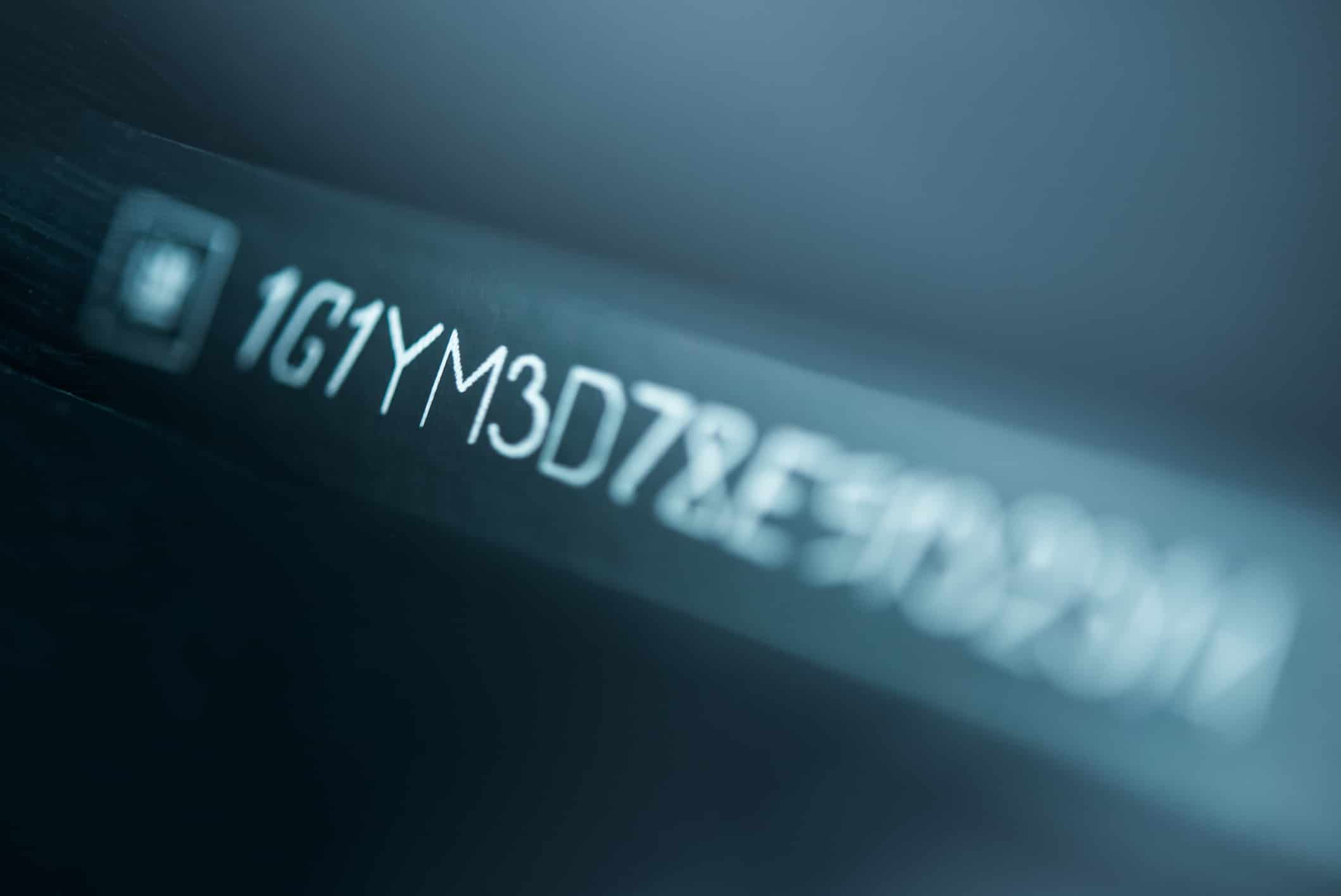
On most modern cars, the easiest place to spot the VIN is at the base of the windscreen on the driver's side, visible from outside through the glass.You will usually also find it on the driver's door pillar, on a sticker or metal plate that becomes visible when the door is open, and marked on the body or chassis itself, commonly in the engine bay, on the floor near the front seats, or in the door shuts. Locations vary by manufacturer, and on some models the marking sits under a plastic trim panel, so do not panic if it is not immediately obvious. If a sticker or plate has been damaged or replaced, the VIN stamped into the body or chassis is generally considered the definitive identifier.
Where To Find It On Paper
The most reliable place to check is your Vehicle Registration Certificate (VRC), the ownership document issued by the Department of Transport. The VIN will often also appear on a hire purchase or PCP agreement alongside the registration number, since the lender needs to identify the exact vehicle it has an interest in. If the vehicle was imported from the UK, the VIN will normally appear on the V5C registration certificate or the accompanying import documentation.
Checking For A Recall
A recall happens when a manufacturer discovers a safety defect in certain vehicles and calls them back to be repaired, free of charge. Recalls are specific to individual vehicles rather than to every car of the same make and model, which is why the VIN matters here. Most manufacturers offer an online recall checker where you enter your VIN, or in some cases your registration number, to see whether your car is affected. The RSA also publishes current recall campaigns on its website. Do not rely on the NCT to catch these, as the test does not identify recall campaigns.
Why It Matters When Buying A Used Car
Nothing stops you buying a second-hand car without ever looking at the VIN. Plenty of people do. But it means skipping the one check that confirms the car is what the seller says it is. Before buying, compare the VIN marked on the vehicle with the one on the VRC, in every location where it appears. A mismatch is a serious warning sign. It can mean the car is stolen and 'cloned' with another vehicle's identity, or that it is a 'cut and shut', meaning two crash-damaged cars welded together, which is dangerous to drive. Either way, walk away.
The VIN is also central to a vehicle history check. Although you run the report using the registration number, the report returns the VIN on record so you can confirm it matches the VRC and the car itself, alongside details such as write-offs, outstanding finance and mileage history. These are things a seller may not volunteer.
Importing A Car? You'll Need It
If you are bringing a car into Ireland, you must register it at an NCTS centre, booking your appointment within 7 days of the car's arrival and completing registration within 30 days. You will need to point out the VIN to the inspector when the vehicle is examined, so it is worth locating it before your appointment rather than hunting for it in the car park. Once the car is registered, you will need car insurance in place before you can pay motor tax and get it on the road.
The VIN is your car's permanent identity: 17 characters, unchangeable, and recorded where it matters. Check it on the car, check it on the VRC, and if the two ever disagree, trust the code, not the seller.